Researching two new stories in Middleham, Yorkshire
I have spent a lovely week in Middleham, Yorkshire, having a wonderful rest in a wonderful cottage (shameless ad here – have a look, well recommended) and researching new stories. Its amazing how so small and pretty a town has such history within easy reach.
I was concentrating on Richard III and the Abbeys and their Dissolution.
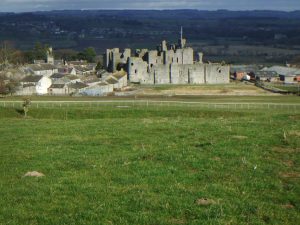
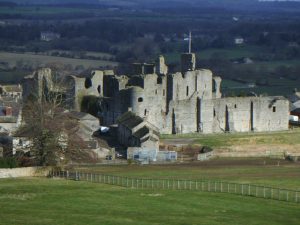
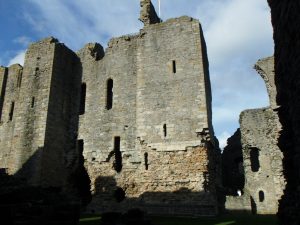
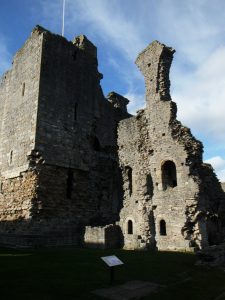
Richard III I already have 2 stories concerning him but this time I decided to look at him through a child’s eyes. I spent a great deal of time looking at both Middleham Castle and the old Motte and Bailey castle called Williams Hill,that preceded it. The castle was the main childhood home during the formative years of the future Richard III. The castle is an impressive ruin. It is easy to sit and think about what it was like at the time and about the lives of the people who lived in it.
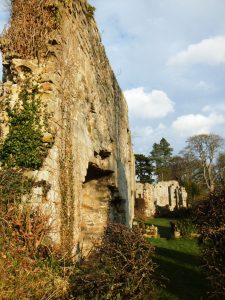
Middleham Castle
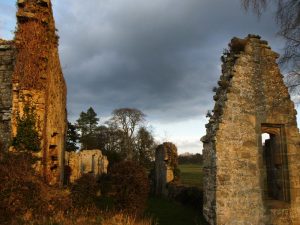
Middleham Castle
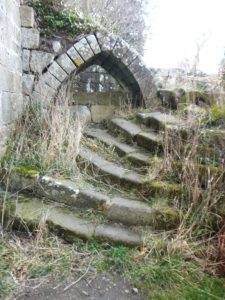
Middleham Castle
I was imagining the young Richard studying books, listening to teachers, practicing both writing and the sword as well as other weapons. he would have learnt how to joust, all in preparation to be a possible king.
I was also imagining him as a young boy doing what children do. Making a pleasant nuisance of himself in the castle, raiding the kitchens underneath the keep, playing hide and seek in the castle corridors, looking at the views from the top of the keep, playing soldiers with wooden swords in the ruins of the old Motte and Bailey, William’s Hill.
William's Hill, Middleham
Williams Hill, Middleham
I could see him running down to the River Ure for a swim to cool off in the summer, and riding over the moors whilst hunting or just for fun. He would have visited Jervaulx abbey and talked to the Abbot, and sampled their cheese that became known as Wensleydale cheese. He would have investigated the nearby copper and lead mines belonging to the Abbey.
All a long way from his adulthood and premature death, and subsequent labelling as a murderer and vengeful cripple.
This new story will be performed all over the UK this summer.
The Abbeys and the Dissolution. I have a commission on this subject too, and took the opportunity of visiting two nearby Cistercian Abbeys, Fountains Abbey and Jervaulx Abbey, to get a feeling of what it was like to be a monk in one of these establishments. More of that later.
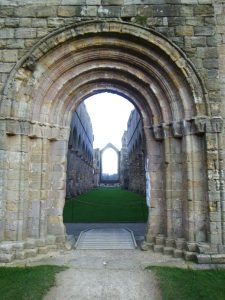
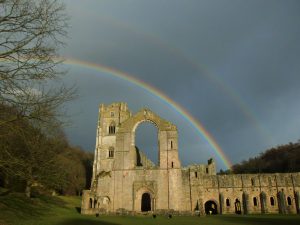
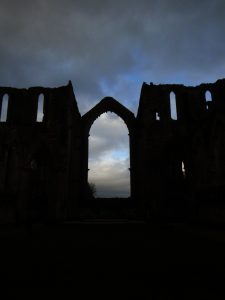
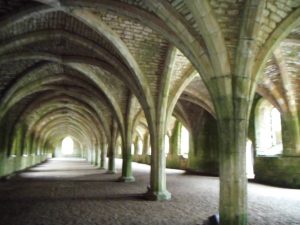
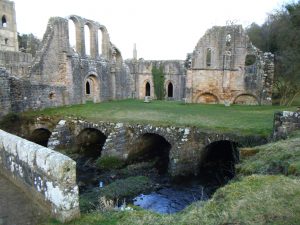
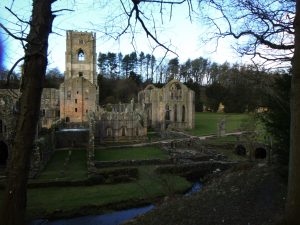
However the visits made me reflect on how such places are preserved and presented to us these days.. Fountains is managed by National Trust / English Heritage. It is well presented, the buildings / ruins managed and repaired and scrubbed clean to an inch of their life. The grounds are kept in pristine condition, not a weed in sight. It costs a substantial amount to get in. You even have to pay to park. It’s a wonderful place to visit, especially when the weather treats you to something special, have a look at these photos.
Fountains Abbey
Fountains Abbey
Fountains Abbey
Fountains Abbey
Fountains Abbey
Fountains Abbey
Jervaulx Abbey
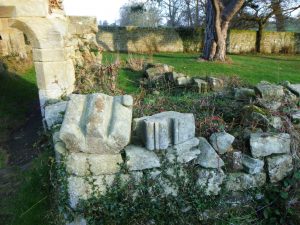
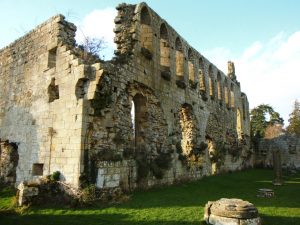
Jervaulx on the other hand is privately owned. The ruins are just as impressive, it was nearly as large an establishment as Fountains. It’s been left in the condition that attracted the Romantic Movement to such places at the end of the C18. One could imagine Wordsworth and Turner on their grand tours sitting and marvelling, Wordsworth with a pen in his hand and Turner his paintbrush. (Another commission, but more of that in another blog). The buildings / ruins are not so clean, moss and bracken and other growth festoon the walls, the gardens are prettily unkempt. Its not free to get in, there is an honesty box asking no more than £3 per person, there is a good a guidebook as EH produce, again payment into an honesty box.
Jervaulx Abbey
Jervaulx Abbey
Jervaulx Abbey
Jervaulx Abbey
Jervaulx Abbey
Jervaulx Abbey
Jervaulx Abbey
Have a look at the photos and make your own decision.
As for the monks they must have had a hard life, but I can’t imagine that they could not every day marvel at their surroundings. The Abbeys may have been places of religion but, by the C16 were the main economic powerhouses in their areas, owning, working, and renting out thousands of acres of farmland, and owning towns and villages. The Abbots weren’t just vicars, they were important people, with the power to speak in Parliament. They were directly in control of all the Abbeys assets. After the Black Death the number of monks had reduced, and many parts of these Abbeys became empty. There were rumours of the monks not being as holy as they should. The King, Henry VIII was parting company with the Catholic Church. The Abbots must have been feeling the cold winds of change. Then the Kings Commissioners arrived, the Valor Ecclesiasticus, enquiring into the running of each Abbey, how holy were the monks, what did the Abbey own, in land and gold. Then came the Act of Suppression, the Abbots relinquishing their power and the estates to the king. Everything was accounted for and sold off. The lead was stripped off the roofs which led to the final fall of the Abbeys and resulting in the ruins we see today.